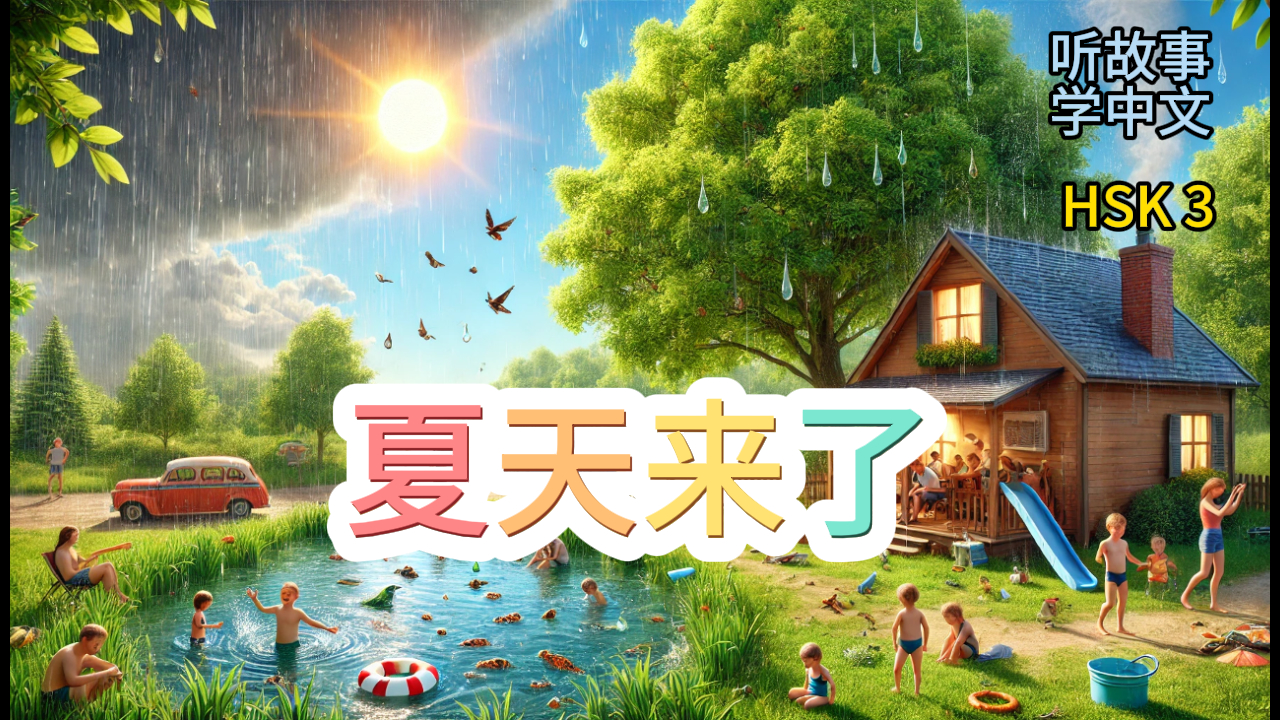
Summer is coming!
夏天来了,太阳公公非常热情,天天高挂在天上,烤着大地。小草说:“我快要变干了。”小鱼儿说:“太热了,我的家水少了,我快要晒干了。”小鸟也飞到树荫下,不再唱歌,看起来很累。人们都躲进了有空调的房间,享受凉爽。
夏天的天气变化很快。刚刚还是大太阳,突然间乌云密布,天色变黑了。雷公公敲起了大鼓,“轰隆隆”,闪电伯伯在天空中跳舞。开始下小雨,“滴答滴答”,然后变成了大雨,“哗啦啦”。雨后,空气很清新,人们的脸上也露出了笑容,坐在树荫下,听着知了的叫声,享受雨后的凉爽。
夏天也是悠闲的季节。我们可以带着救生圈去海边游泳,有的人在海里玩球,有的人在游泳,还有的人在玩水。我们也可以带上鱼竿去钓鱼,提着小桶去捉虾。还可以在家做冰淇淋,学做凉拌菜,享受美味。
虽然夏天很热,但我还是喜欢这个季节。
夏天来了,
拼音: Xiàtiān láile,
英文: Summer is here,
太阳公公非常热情,
拼音: Tàiyáng gōnggong fēicháng rèqíng,
英文: The sun is very enthusiastic,
天天高挂在天上,
拼音: Tiāntiān gāoguà zài tiānshàng,
英文: Hanging high in the sky every day,
烤着大地。
拼音: Kǎozhe dàdì。
英文: Baking the earth.
小草说:“我快要变干了。”
拼音: Xiǎo cǎo shuō: “Wǒ kuài yào biàn gānle.”
英文: The grass said, “I’m about to dry up.”
小鱼儿说:“太热了,我的家水少了,我快要晒干了。”
拼音: Xiǎo yú’ér shuō: “Tài rèle, wǒ de jiā shuǐ shǎole, wǒ kuài yào shài gānle.”
英文: The little fish said, “It’s too hot, my home has less water, I’m about to dry up.”
小鸟也飞到树荫下,
拼音: Xiǎo niǎo yě fēi dào shùyīn xià,
英文: The little birds also flew to the shade,
不再唱歌,
拼音: Bù zài chànggē,
英文: No longer singing,
看起来很累。
拼音: Kàn qǐlái hěn lèi。
英文: Looking very tired.
人们都躲进了有空调的房间,
拼音: Rénmen dōu duǒ jìnle yǒu kòngtiáo de fángjiān,
英文: People all hid in air-conditioned rooms,
享受凉爽。
拼音: Xiǎngshòu liángshuǎng。
英文: Enjoying the coolness.
夏天的天气变化很快。
拼音: Xiàtiān de tiānqì biànhuà hěn kuài。
英文: The weather changes very quickly in summer.
刚刚还是大太阳,
拼音: Gānggāng háishì dà tàiyáng,
英文: It was just a big sunny day,
突然间乌云密布,
拼音: Tūrán jiān wūyún mìbù,
英文: Suddenly, dark clouds covered the sky,
天色变黑了。
拼音: Tiānsè biàn hēile。
英文: The sky turned dark.
雷公公敲起了大鼓,
拼音: Léi gōnggong qiāo qǐle dà gǔ,
英文: The thunder rumbled loudly,
“轰隆隆”,
拼音: “Hōng lōng lōng”
英文: “Boom boom boom,”
闪电伯伯在天空中跳舞。
拼音: Shǎndiàn bóbo zài tiānkōng zhōng tiàowǔ。
英文: The lightning danced in the sky.
开始下小雨,
拼音: Kāishǐ xià xiǎoyǔ,
英文: It started to drizzle,
“滴答滴答”,
拼音: “Dīdā dīdā”,
英文: “Drip drop,”
然后变成了大雨,
拼音: Ránhòu biàn chéngle dàyǔ,
英文: Then it turned into a heavy rain,
“哗啦啦”。
拼音: “Huālālā”。
英文: “Whoosh whoosh.”
雨后,
拼音: Yǔ hòu,
英文: After the rain,
空气很清新,
拼音: Kōngqì hěn qīngxīn,
英文: The air was very fresh,
人们的脸上也露出了笑容,
拼音: Rénmen de liǎn shàng yě lùchūle xiàoróng,
英文: People also smiled,
坐在树荫下,
拼音: Zuò zài shùyīn xià,
英文: Sitting under the shade,
听着知了的叫声,
拼音: Tīngzhe zhīliǎo de jiàoshēng,
英文: Listening to the cicadas,
享受雨后的凉爽。
拼音: Xiǎngshòu yǔ hòu de liángshuǎng。
英文: Enjoying the coolness after the rain.
夏天也是悠闲的季节。
拼音: Xiàtiān yěshì yōuxián de jìjié。
英文: Summer is also a leisurely season.
我们可以带着救生圈去海边游泳,
拼音: Wǒmen kěyǐ dàizhe jiùshēngquān qù hǎibiān yóuyǒng,
英文: We can take lifebuoys to the beach for swimming,
有的人在海里玩球,
拼音: Yǒu de rén zài hǎi lǐ wán qiú,
英文: Some people play ball in the sea,
有的人在游泳,
拼音: Yǒu de rén zài yóuyǒng,
英文: Some people swim,
还有的人在玩水。
拼音: Hái yǒu de rén zài wán shuǐ。
英文: And some people play with water.
我们也可以带上鱼竿去钓鱼,
拼音: Wǒmen yě kěyǐ dài shàng yúgān qù diàoyú,
英文: We can also take fishing rods to go fishing,
提着小桶去捉虾。
拼音: Tí zhe xiǎo tǒng qù zhuō xiā。
英文: Take small buckets to catch shrimp.
还可以在家做冰淇淋,
拼音: Hái kěyǐ zài jiā zuò bīngqílín,
英文: We can also make ice cream at home,
学做凉拌菜,
拼音: Xué zuò liángbàn cài,
英文: Learn to make cold dishes,
享受美味。
拼音: Xiǎngshòu měiwèi。
英文: Enjoy the delicious food.
虽然夏天很热,
拼音: Suīrán xiàtiān hěn rè,
英文: Although summer is very hot,
但我还是喜欢这个季节。
拼音: Dàn wǒ háishì xǐhuān zhège jìjié。
英文: I still like this season.
描写性散文的特点
具体生动的描写:
拼音: jùtǐ shēngdòng de miáoxiě
英文: Specific and vivid description
通过细致的描写,形象地展现了夏天的景象和活动,例如太阳的炙热、草木的疲惫、鸟儿的无精打采、天气的变化以及人们在夏天的各种活动。
拼音: Tōngguò xìzhì de miáoxiě, xíngxiàng de zhǎnxiànle xiàtiān de jǐngxiàng hé huódòng, lìrú tàiyáng de zhìrè, cǎomù de píjuàn, niǎor de wújīndǎcǎi, tiānqì de biànhuà yǐjí rénmen zài xiàtiān de gè zhǒng huódòng.
英文: Through detailed descriptions, it vividly presents the scenes and activities of summer, such as the scorching sun, the fatigue of the grass and trees, the listlessness of the birds, the changes in the weather, and the various activities people engage in during summer.
拟人化手法:
拼音: nǐrénhuà shǒufǎ
英文: Personification
使用了拟人化的修辞手法,让自然景物如太阳、小草、小鱼儿、小鸟等赋予了人的特征和情感,使得描写更加生动有趣。
拼音: Shǐyòngle nǐrénhuà de xiūcí shǒufǎ, ràng zìrán jǐngwù rú tàiyáng, xiǎo cǎo, xiǎo yú’ér, xiǎo niǎo děng fùyǔle rén de tèzhēng hé qínggǎn, shǐ de miáoxiě gèng jiā shēngdòng yǒuqù.
英文: Using personification, natural elements like the sun, grass, little fish, and birds are given human characteristics and emotions, making the descriptions more vivid and interesting.
描绘景物和场景:
拼音: miáohuì jǐngwù hé chǎngjǐng
英文: Depiction of scenery and scenes
详细描写了夏天的各种场景,包括大太阳下的景象、雷雨的变化、雨后的清新,以及人们在海边游泳、钓鱼、捉虾等活动。
拼音: Xiángxì miáoxiěle xiàtiān de gè zhǒng chǎngjǐng, bāokuò dà tàiyáng xià de jǐngxiàng, léiyǔ de biànhuà, yǔhòu de qīngxīn, yǐjí rénmen zài hǎibiān yóuyǒng, diàoyú, zhuō xiā děng huódòng.
英文: Detailed descriptions of various summer scenes, including the view under the big sun, changes in thunderstorms, the freshness after rain, and activities such as swimming, fishing, and catching shrimp at the beach.
表达感受和情感:
拼音: biǎodá gǎnshòu hé qínggǎn
英文: Expressing feelings and emotions
通过对天气变化和人们活动的描写,表达了对夏天的热爱之情,即使天气炎热,仍然喜欢这个季节。
拼音: Tōngguò duì tiānqì biànhuà hé rénmen huódòng de miáoxiě, biǎodále duì xiàtiān de rè’ài zhī qíng, jíshǐ tiānqì yánrè, réngrán xǐhuān zhège jìjié.
英文: Through descriptions of weather changes and people’s activities, it expresses a love for summer, showing that despite the heat, there is still an affection for this season.
1. 词汇积累
词汇积累
拼音: cíhuì jīlěi
英文: Vocabulary accumulation
文章中包含了许多与夏天相关的词汇和表达,可以帮助学习者扩展词汇量。例如:
拼音: Wénzhāng zhōng bāohánle xǔduō yǔ xiàtiān xiāngguān de cíhuì hé biǎodá, kěyǐ bāngzhù xuéxí zhě kuòdà cíhuì liàng. Lìrú:
英文: The article contains many summer-related words and expressions, which can help learners expand their vocabulary. For example:
天气
拼音: tiānqì
英文: weather
炎热
拼音: yánrè
英文: hot
乌云密布
拼音: wūyún mìbù
英文: overcast
雷
拼音: léi
英文: thunder
闪电
拼音: shǎndiàn
英文: lightning
倾盆大雨
拼音: qīngpén dàyǔ
英文: torrential rain
自然现象
拼音: zìrán xiànxiàng
英文: natural phenomena
大地
拼音: dàdì
英文: earth
草
拼音: cǎo
英文: grass
小鱼儿
拼音: xiǎo yú’ér
英文: little fish
小鸟
拼音: xiǎo niǎo
英文: little bird
树荫
拼音: shùyīn
英文: shade
活动
拼音: huódòng
英文: activities
游泳
拼音: yóuyǒng
英文: swimming
钓鱼
拼音: diàoyú
英文: fishing
捉虾
拼音: zhuō xiā
英文: catching shrimp
做冰淇淋
拼音: zuò bīngqílín
英文: making ice cream
凉拌菜
拼音: liángbàn cài
英文: cold dishes
2. 句型和语法
句型和语法
拼音: jùxíng hé yǔfǎ
英文: Sentence patterns and grammar
文章使用了多种句型和语法结构,适合练习和掌握。例如:
拼音: Wénzhāng shǐyòngle duō zhǒng jùxíng hé yǔfǎ jiégòu, shìhé liànxí hé zhǎngwò. Lìrú:
英文: The article uses various sentence patterns and grammar structures, suitable for practice and mastery. For example:
陈述句
拼音: chénshùjù
英文: declarative sentence
太阳公公非常热情。
拼音: Tàiyáng gōnggong fēicháng rèqíng。
英文: The sun is very enthusiastic.
描写句
拼音: miáoxiě jù
英文: descriptive sentence
雷公公敲起了大鼓,“轰隆隆”。
拼音: Léi gōnggong qiāo qǐle dà gǔ,“hōng lōng lōng”。
英文: The thunder rumbled loudly, “boom boom boom.”
对话句
拼音: duìhuà jù
英文: dialogue sentence
小草说:“我快要变干了。”
拼音: Xiǎo cǎo shuō: “Wǒ kuài yào biàn gānle.”
英文: The grass said, “I’m about to dry up.”
3. 表达天气和情感
表达天气和情感
拼音: biǎodá tiānqì hé qínggǎn
英文: Expressing weather and emotions
学习如何描述天气的变化以及人和动物的反应和情感。
拼音: Xuéxí rúhé miáoshù tiānqì de biànhuà yǐjí rén hé dòngwù de fǎnyìng hé qínggǎn。
英文: Learn how to describe changes in weather and the reactions and emotions of people and animals.
天气变化
拼音: tiānqì biànhuà
英文: weather changes
刚刚还是大太阳,突然间乌云密布,天色变黑了。
拼音: Gānggāng háishì dà tàiyáng, tūrán jiān wūyún mìbù, tiānsè biàn hēile。
英文: It was just a big sunny day, suddenly, dark clouds covered the sky, and the sky turned dark.
情感表达
拼音: qínggǎn biǎodá
英文: emotional expression
人们的脸上也露出了笑容。
拼音: Rénmen de liǎn shàng yě lùchūle xiàoróng。
英文: People also smiled.
4. 日常活动
日常活动
拼音: rìcháng huódòng
英文: daily activities
文章中提到了许多夏天的日常活动,可以让学习者了解并使用这些活动相关的词汇和表达。
拼音: Wénzhāng zhōng tídàole xǔduō xiàtiān de rìcháng huódòng, kěyǐ ràng xuéxí zhě liǎojiě bìng shǐyòng zhèxiē huódòng xiāngguān de cíhuì hé biǎodá。
英文: The article mentions many daily activities of summer, allowing learners to understand and use the related vocabulary and expressions.
去海边游泳
拼音: qù hǎibiān yóuyǒng
英文: go swimming at the beach
钓鱼
拼音: diàoyú
英文: fishing
捉虾
拼音: zhuō xiā
英文: catching shrimp
自制冰淇淋
拼音: zìzhì bīngqílín
英文: making ice cream
凉拌菜
拼音: liángbàn cài
英文: cold dishes
5. 关联词和连接词
关联词和连接词
拼音: guānliáncí hé liánjiécí
英文: conjunctions and connectors
学习如何使用关联词和连接词来连接句子和段落。
拼音: Xuéxí rúhé shǐyòng guānliáncí hé liánjiécí lái liánjiē jùzi hé duànluò。
英文: Learn how to use conjunctions and connectors to link sentences and paragraphs.
表示转折:虽然…但是…
拼音: biǎoshì zhuǎnzhé: suīrán…dànshì…
英文: expressing contrast: although…but…
表示顺序:然后、开始、刚刚、突然间
拼音: biǎoshì shùnxù: ránhòu, kāishǐ, gānggāng, tūrán jiān
英文: expressing sequence: then, start, just now, suddenly
6. 拟人化表达
拟人化表达
拼音: nǐrénhuà biǎodá
英文: personification
文章中使用了拟人化的表达方式,将自然现象和物体赋予人类的特征和情感。这种表达方式可以丰富文章的内容,增加趣味性。
拼音: Wénzhāng zhōng shǐyòngle nǐrénhuà de biǎodá fāngshì, jiāng zìrán xiànxiàng hé wùtǐ fùyǔ rénlèi de tèzhēng hé qíng
gǎn. Zhè zhǒng biǎodá fāngshì kěyǐ fēngfù wénzhāng de nèiróng, zēngjiā qùwèixìng.
英文: The article uses personification to give natural phenomena and objects human characteristics and emotions. This way of expression can enrich the content of the article and increase its interest.
小草说:“我快要变干了。”
拼音: Xiǎo cǎo shuō: “Wǒ kuài yào biàn gānle.”
英文: The grass said, “I’m about to dry up.”
雷公公敲起了大鼓。
拼音: Léi gōnggong qiāo qǐle dà gǔ。
英文: The thunder rumbled loudly.
通过学习这篇文章,学习者可以不仅掌握更多的词汇和句型,还可以提高自己的描述能力和表达能力。这些都是在实际生活中非常有用的语言技能。




发表评论